
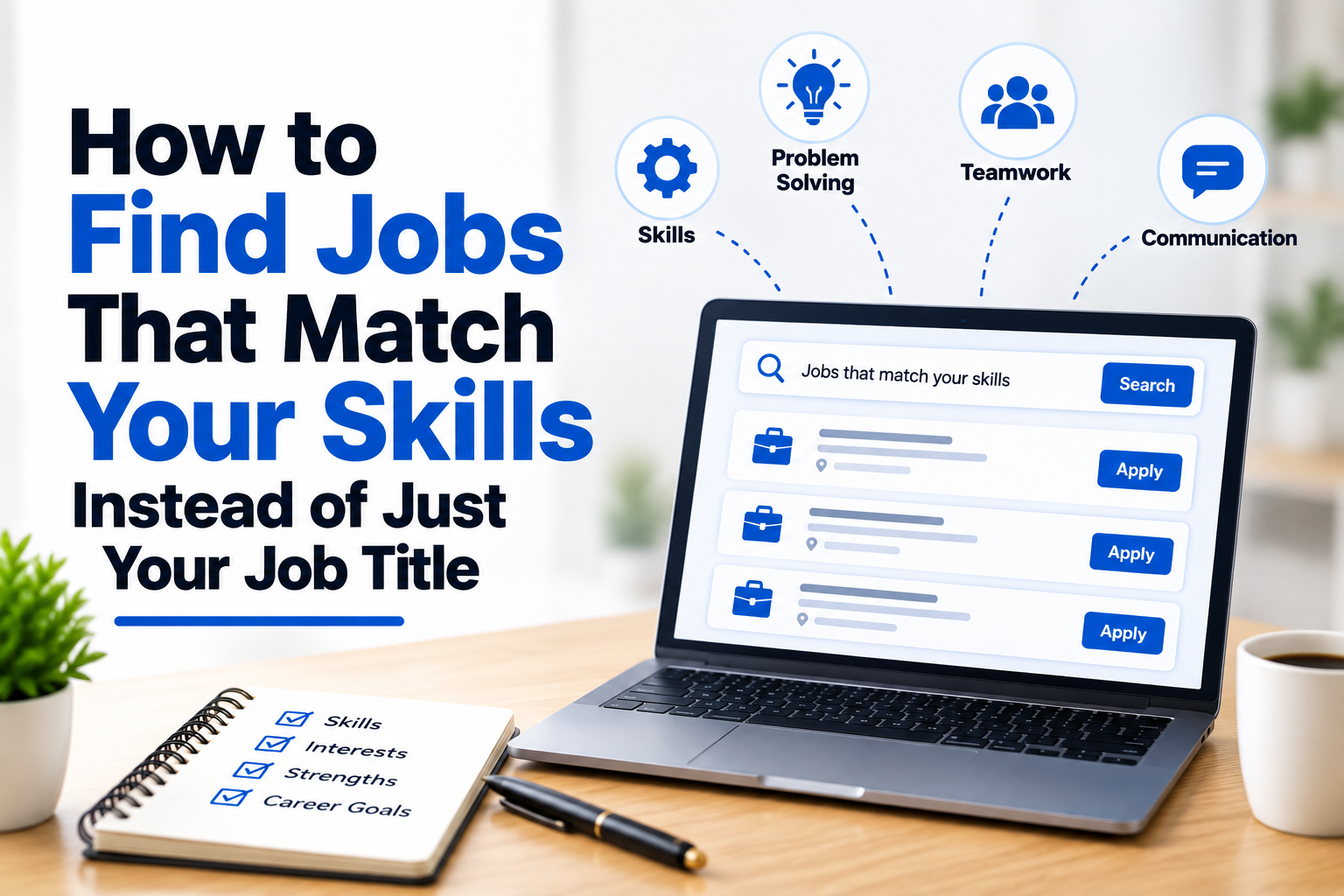

Many job seekers search only for jobs that match their current job title. However, your job title does not always represent everything you can do. Your skills, experience, interests, and transferable abilities can open the door to many different career opportunities. Learning how to search based on your skills instead of just your title can help you discover more relevant jobs and expand your career options.
1 Identify Your Core Skills
“Start by listing the skills you have developed through your education, work experience, internships, projects, and personal activities. Separate them into technical skills and soft skills. For example, communication, Excel, data analysis, customer service, project management, problem-solving, and teamwork can be useful across multiple job roles.”
2 Look Beyond Your Current Job Title
“Your current job title may limit your job search if you use it as your only keyword. Instead, think about the tasks you perform and the skills you use every day. A person working as a Customer Support Executive, for example, may also qualify for roles such as Customer Success Executive, Client Relationship Executive, Inside Sales Executive, or Operations Executive depending on their skills and experience.”
3 Use Skills as Job Search Keywords
“When searching on job portals, try using skill-based keywords instead of searching only for your current designation. If you have skills in Excel, data analysis, reporting, and communication, search for jobs using combinations of these skills. This can help you discover positions you may not have considered before.”
4 Explore Transferable Skills
“Transferable skills are abilities that can be used across different industries and job roles. Communication, leadership, problem-solving, time management, teamwork, customer handling, and analytical thinking are valuable in many careers. Identify these skills and look for roles where they are relevant.”
5 Read Job Descriptions Carefully
“Do not reject a job simply because the job title is unfamiliar. Read the responsibilities and requirements carefully. Compare them with your skills and experience. You may find that your background matches the role even though the position has a different title from your previous job.”
6 Find Jobs That Use Similar Skills
“Create a list of your strongest skills and search for roles that require those abilities. For example, someone with skills in SQL, Excel, reporting, and data visualization could explore roles such as Data Analyst, Reporting Analyst, Business Analyst, or MIS Analyst depending on their overall qualifications.”
7 Use Job Portals Effectively
“Use multiple keywords and filters when searching for jobs. Search by skills, industry, experience level, location, and responsibilities instead of relying only on one job title. Save relevant searches and review new opportunities regularly.”
8 Match Your Resume to Your Skills
“Your resume should clearly communicate the skills you want employers to notice. Highlight relevant skills, projects, certifications, and achievements. When applying for different types of roles, customize your resume so that the most relevant skills appear prominently.”
9 Consider Adjacent Career Opportunities
“You do not always need to make a complete career change to explore something new. Look for adjacent roles where your existing skills can be transferred with minimal additional training. This approach can help you move into a new career path while still using the experience you have already gained.”
10 Identify Skill Gaps and Upskill
“After finding roles that match your skills, compare your profile with the requirements employers commonly ask for. Identify missing skills and improve them through online courses, certifications, projects, or practical experience. Even a few targeted improvements can increase your eligibility for better opportunities.”
Simple Example
“Imagine your current job title is Administrative Assistant, but your strongest skills include Excel, reporting, communication, scheduling, and data management. Instead of searching only for 'Administrative Assistant' jobs, you could also explore roles such as Operations Coordinator, MIS Executive, Office Coordinator, Reporting Executive, or Operations Executive.”
Final Thought
Your job title describes what you are called, but your skills describe what you can actually do. When searching for your next opportunity, focus on your abilities, transferable skills, and career interests rather than limiting yourself to one job title. A skill-based job search can help you discover more opportunities, explore new career paths, and find roles that are a better match for your strengths.
Content Prepared By: Job Baskets Team | Dated: October 5, 2026